Why Even Tech-Savvy People Fall for Cyber Scams
 Paul Oyelakin
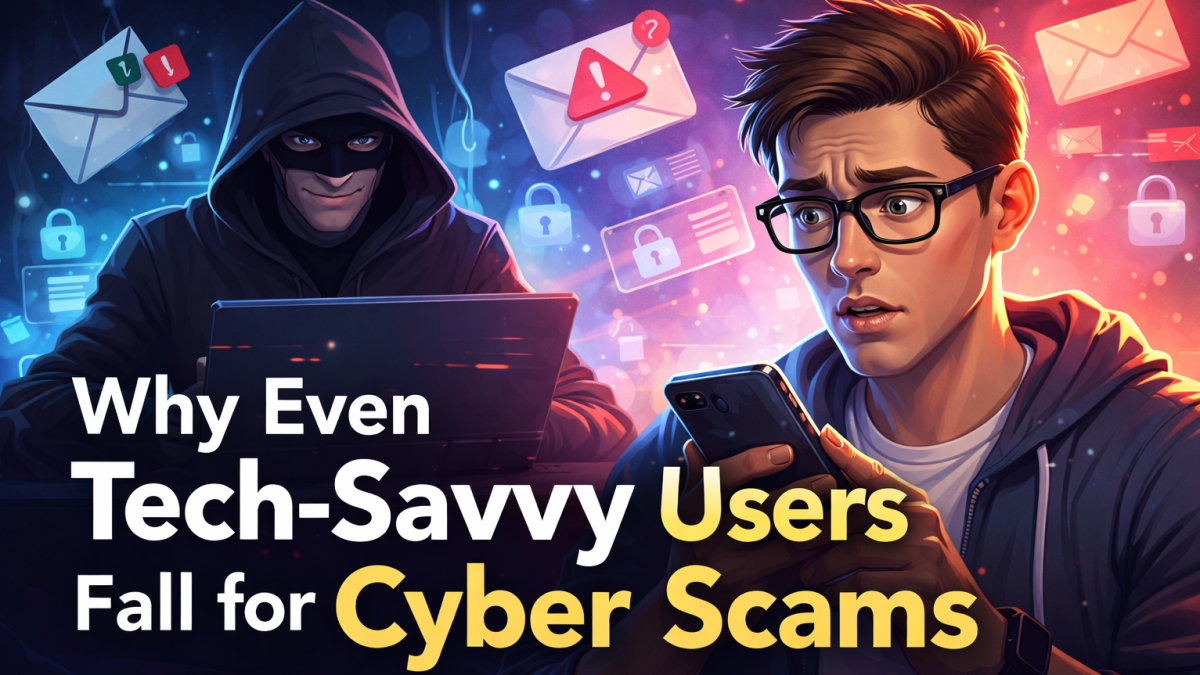
Even experts get fooled. Learn how psychology, AI, and overconfidence make tech-savvy users vulnerable to modern cyber scams.
Cyber scams are often portrayed as something that only affects inexperienced or careless internet users. People who are highly familiar with technology, including students, professionals, and digital natives, fall for scams every day. As cybercriminals refine their techniques, knowledge alone is no longer enough to guarantee protection.
Understanding why tech-savvy individuals are still vulnerable reveals that cybersecurity is as much about psychology and behavior as it is about technical skill.
The Myth of “It Won’t Happen to Me”
One of the biggest risk factors in cybersecurity is overconfidence. People who are comfortable with technology often believe they can easily spot scams, which can lead to faster decisions and fewer safety checks. This mindset, sometimes called the “optimism bias”, causes individuals to underestimate their personal risk.
Cybercriminals take advantage of this confidence by creating scams that appear routine or familiar. When a message looks like something a user sees every day, such as a login notification or shared document alert, it is more likely to be trusted without scrutiny.
How Scammers Exploit Human Psychology
Modern cyber scams rely heavily on psychological manipulation. Instead of exploiting software flaws, attackers exploit human instincts. Common emotional triggers include urgency, fear, curiosity, and authority.
Messages that warn of account suspension, suspicious activity, or missed deadlines create pressure to act quickly. When people feel rushed, they are less likely to verify information or notice subtle warning signs. Authority-based scams impersonate supervisors, professors, IT departments, or financial institutions, relying on social norms that encourage compliance.
Even highly educated users can fall victim when these emotional triggers override rational thinking.
Familiarity Breeds Trust
Many scams succeed because they imitate platforms and services people already trust. Fake emails may closely resemble messages from Google, Microsoft, banks, or schools. Logos, formatting, and tone are often nearly identical to legitimate communications.
For tech-savvy users who regularly interact with these platforms, familiarity can lead to automatic behavior. Clicking a link or responding to a prompt becomes a habit rather than a conscious decision, making it easier for attackers to slip through unnoticed.
The Role of Information Overload
Another reason tech-savvy individuals fall for scams is sheer volume. People receive dozens or even hundreds of emails, notifications, and messages each day. Sorting through them requires constant attention, which can lead to fatigue.
When users are multitasking, stressed, or distracted, they are more likely to make mistakes. Cybercriminals exploit this by sending messages during busy times, such as work hours, exam periods, or tax season, when users are less likely to slow down and verify details.
How AI Has Changed the Game
Artificial intelligence has made cyber scams more convincing than ever. AI-generated phishing emails are grammatically perfect, personalized, and context-aware. Some scams even reference real events, recent purchases, or known contacts.
Deepfake technology has further blurred the line between real and fake communication. Voice cloning and realistic video impersonations have been used to trick employees into transferring money or sharing confidential information. These attacks bypass traditional warning signs, making technical knowledge less effective as a defense.
Why Knowledge Alone Isn’t Enough
While understanding cybersecurity basics is important, knowledge does not eliminate human error. Scams often succeed not because users lack information, but because attackers exploit moments of vulnerability: stress, urgency, trust, or distraction.
Cybersecurity decisions are rarely made in calm, ideal conditions. They happen in real life, where people are busy, tired, and juggling responsibilities.
How Tech-Savvy Users Can Better Protect Themselves
For experienced users, improving cybersecurity often means changing habits rather than learning new tools. Slowing down before responding to messages, verifying unexpected requests through separate channels, and questioning urgency can make a significant difference.
Using password managers, enabling multi-factor authentication, and keeping software updated add technical layers of protection that reduce the impact of mistakes. Just as importantly, cultivating skepticism, even toward familiar-looking messages, helps counter overconfidence.
Why This Matters
As cyber scams continue to evolve, the idea that only the inexperienced are at risk becomes increasingly dangerous. When tech-savvy users let their guard down, the consequences can be just as severe.
Recognizing that everyone is vulnerable shifts cybersecurity from a question of intelligence to one of awareness and behavior.
Final Takeaway
Falling for a cyber scam is not a sign of ignorance, it is often the result of carefully engineered deception. In a digital world designed for speed and convenience, slowing down is one of the most powerful security tools available.
Cybersecurity is not about being perfect. It is about being prepared. Don't be overconfident, prepare yourself by learning more about your online security at pjcourses.com.
Categories: : Blog