AI-Powered Cybercrime: How Hackers Are Using AI and How Defenders Are Fighting Back
 Paul Oyelakin
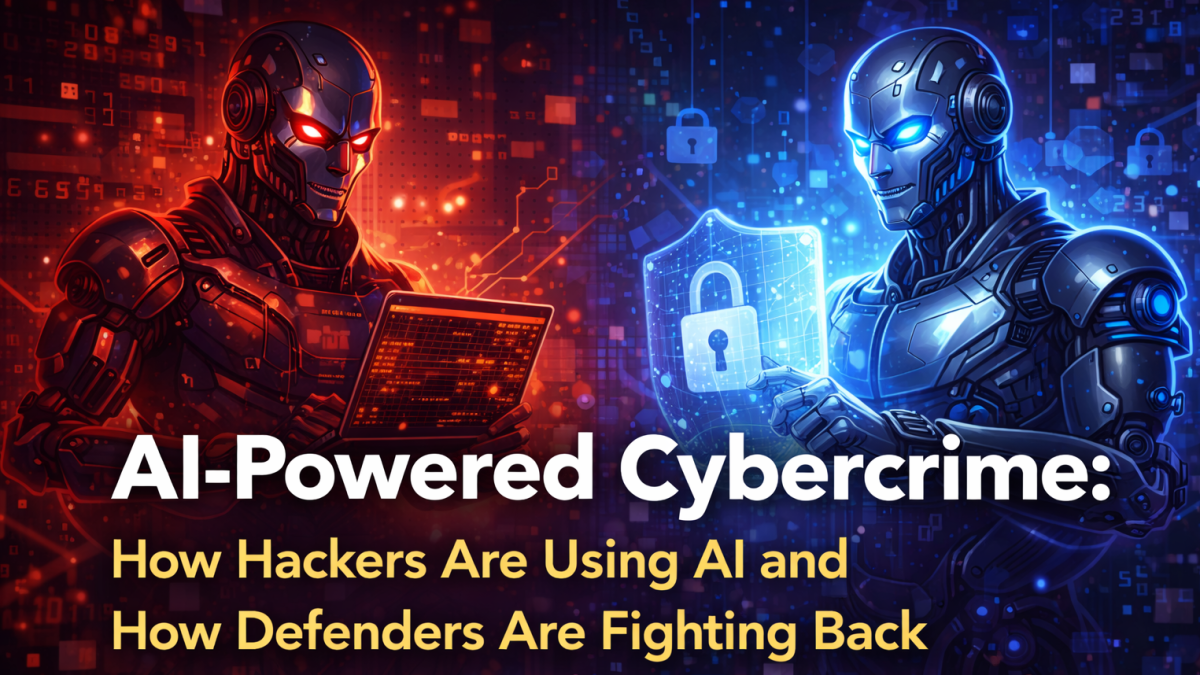
AI is changing cybercrime fast. Discover how hackers use AI and how defenders are fighting back.
Artificial intelligence is transforming nearly every part of modern life, from education and healthcare to entertainment and transportation. However, alongside these benefits, AI has also become a powerful tool for cybercriminals. Hackers are now using AI to make scams more convincing, attacks more efficient, and detection more difficult. At the same time, cybersecurity professionals are using the very same technology to defend systems and users. This ongoing battle between attackers and defenders is shaping the future of cybersecurity.
How Cybercriminals Are Using AI
One of the most significant changes AI has brought to cybercrime is accessibility. In the past, launching a sophisticated cyberattack required advanced technical skills, time, and resources. Today, AI tools can automate many of these processes, allowing even inexperienced attackers to carry out convincing scams.
A common example is AI-generated phishing. Traditional phishing emails were often easy to spot due to poor grammar or generic language. AI has changed that. Attackers can now generate well-written, professional messages that closely mimic legitimate organizations such as banks, schools, employers, or government agencies. These emails can be personalized using information from past data breaches, such as a person’s name, workplace, or recent purchases, making them much harder to detect.
Another growing threat involves deep-fake technology. AI can now clone voices and faces using only a few seconds of audio or video. Cybercriminals have used this technology to impersonate company executives during phone calls or video meetings, instructing employees to transfer money or share confidential information. In some cases, victims only realize they were deceived after the damage is already done.
AI is also being used to automate cyberattacks. Machine learning systems can scan thousands of websites, servers, or networks in seconds, searching for vulnerabilities. Once a weakness is identified, the system can automatically exploit it. This speed gives defenders far less time to respond, increasing the potential impact of an attack.
Why AI-Powered Attacks Are So Effective
AI-driven cybercrime is successful not just because of advanced technology, but because it targets human psychology. Many scams rely on emotional triggers such as urgency, fear, authority, or trust. Messages might warn that an account will be locked, claim suspicious activity has been detected, or appear to come from a trusted figure like a professor, boss, or financial institution.
These tactics are especially effective when combined with AI-generated language that sounds natural and authoritative. Even tech-savvy users can make mistakes when they are rushed, distracted, or emotionally pressured.
Younger users, including Gen Z, often feel confident navigating online spaces. While this confidence can be beneficial, it may also lead to overestimating one’s ability to spot scams. AI-generated content looks increasingly legitimate, blurring the line between real and fake communication.
How Cybersecurity Defenders Are Using AI
While attackers are exploiting AI, defenders are also harnessing its power to protect users and systems. Many modern cybersecurity tools rely on AI to process vast amounts of data that would be impossible for humans to analyze manually.
AI-driven security systems can monitor network traffic and user behavior to detect anomalies, such as unusual login locations, abnormal file access, or unexpected system activity. Instead of relying solely on predefined rules, these systems learn what “normal” behavior looks like and flag deviations that may indicate an attack.
AI is also widely used in email filtering and malware detection. Machine learning models can analyze patterns in phishing emails and malicious websites, blocking threats before they reach users. Over time, these systems improve as they are exposed to new types of attacks.
In more advanced environments, AI can even automate responses to threats. For example, if suspicious activity is detected, the system may automatically isolate a device, lock an account, or alert security teams within seconds. This rapid response can significantly reduce damage.
What This Means for Everyday Users
As AI continues to advance, cyber threats will become more realistic and more frequent. However, technology alone cannot solve the problem. Human awareness remains one of the most important defenses against cybercrime.
Simple habits, such as slowing down before clicking on links, verifying unexpected requests, and being cautious with urgent messages, are more important than ever. Users should be especially skeptical of messages that demand immediate action or request sensitive information.
AI has permanently changed the cybersecurity landscape, but it has not eliminated the need for critical thinking. Understanding how AI is used by both attackers and defenders empowers individuals to make safer choices online.
Looking Ahead
The future of cybersecurity will likely involve an ongoing arms race between increasingly sophisticated attackers and equally advanced defenses. As AI tools continue to improve, collaboration between technology, education, and user awareness will be essential.
In a world where machines can imitate humans, staying secure means staying informed. AI may be powerful, but informed users are still one of the strongest lines of defense.
Everyone starts somewhere, and you can educate yourself on AI for beginners by taking the PJCourses NIST AI-RMF For Beginners course.
Sign up here: NIST AI-RMF Course
Categories: : Blog